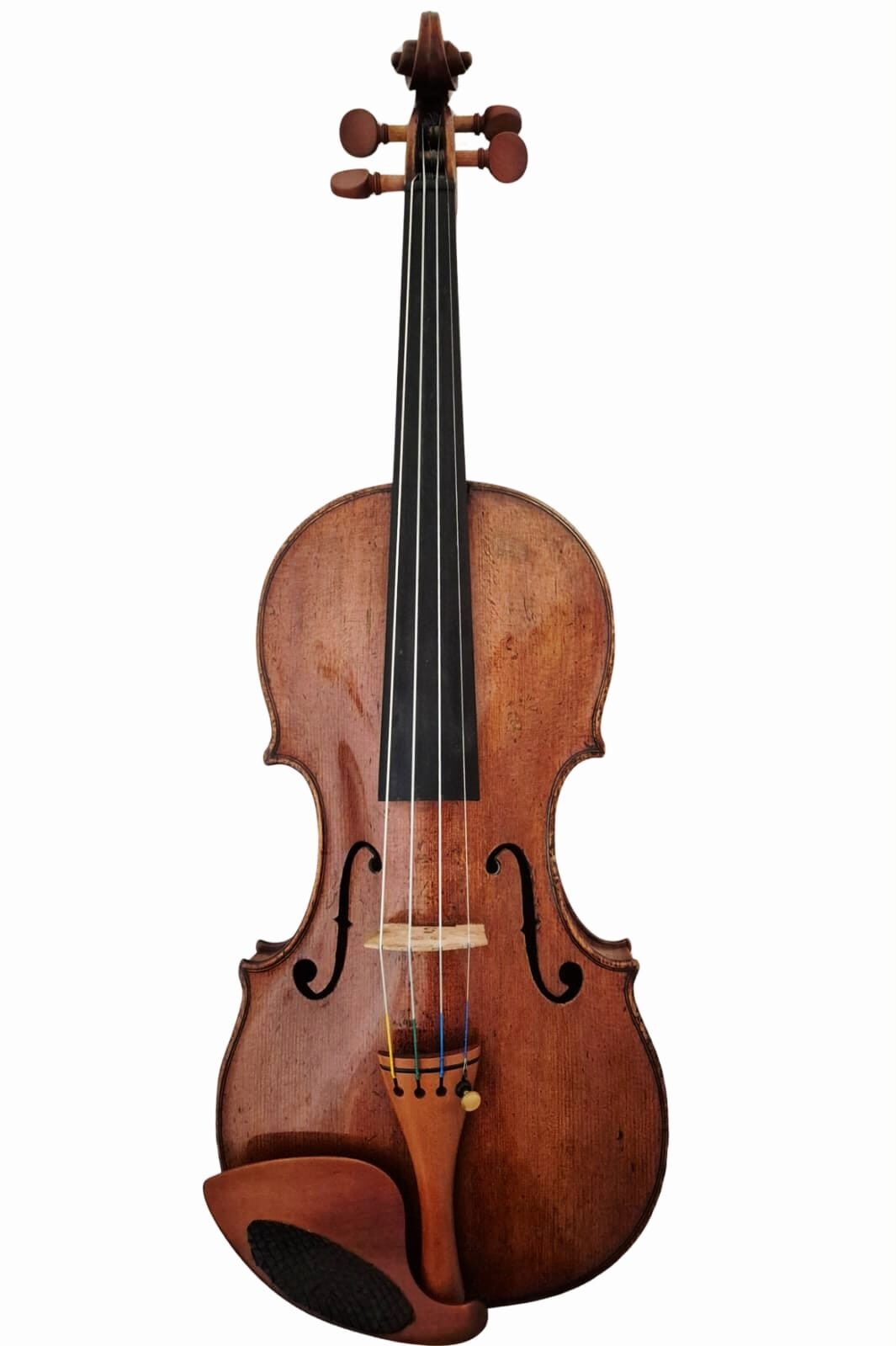
Antonio Gragnani
Antonio Gragnani (13 February 1728 – after 1792) was an Italian violin maker of the Tuscan school. He was born in Livorno, where he spent much of his life and established his own distinctive style of violin making. His father, Onorato Gragnani, was also an instrument maker, and Antonio continued the family tradition.
Gragnani is believed to have received part of his training in Florence before returning to Livorno. During the 18th century, Livorno was an important international port and a lively centre of trade and cultural exchange. This environment provided a stimulating setting for Gragnani’s work and contributed to the development of the distinctive Tuscan school of violin making.
His instruments demonstrate the influence of several of the great Italian makers, particularly Nicolò Amati and Antonio Stradivari. However, Gragnani did not simply reproduce their models. Instead, he developed a highly individual style characterised by elegant proportions, distinctive f-holes, elongated pegboxes and carefully carved scrolls. Some of his instruments also feature the unusual use of whalebone in the purfling, an exceptional material choice among Italian violin makers of the period.
Gragnani’s instruments are known for their strong craftsmanship and individual character. On many of his violins, he used his initials “A. G.” as a brand mark in addition to his maker’s label. His surviving instruments include both models inspired by Stradivari and smaller, more compact designs, demonstrating the variety of his work.
In 1751, Gragnani married Cecilia Bianchi in Livorno. They had at least two sons, Giovanni Pietro Gragnani and Filippo Gragnani. Giovanni Pietro later continued the family’s tradition of instrument making. The exact date of Antonio Gragnani’s death is unknown, although documentary evidence confirms that he was still alive in 1792.
Today, Antonio Gragnani is regarded as one of the notable makers of the Tuscan violin-making tradition. His instruments are valued for their distinctive craftsmanship, elegant appearance and individual tonal character. His ability to combine influences from the great Cremonese makers with his own personal approach makes his violins particularly recognisable among 18th-century Italian instruments
Kai is playing on an violin by Antonio Gragnani, made in the year 1751.